14-day cardiac organoids
14-day cardiac organoids differentiated from the same human induced pluripotent stem cells. Bright field video shows synchronized beating at approximately 60 bpm.
 Open-source ecosystem for in vitro and microphysiological systems
Open ecosystem for organoids, chips, and microphysiological systems
PhysioVerse connects people, datasets, tools, workflows, standards exchange, training, and translational pathways for organoids, body-on-chip systems, tissue chips, and related microphysiological systems. The goal is to reduce fragmentation and help the field move toward reproducible, interoperable, and widely adoptable approaches.
GitHub repositories
PhysioVerse connects visitors to the public GitHub organization, selected repositories, project summaries, documentation, release notes, and citation information.
What PhysioVerse enables
PhysioVerse helps teams discover, contribute, align, and translate advanced in vitro and microphysiological system resources through shared infrastructure.
Explore metadata-rich resources that make advanced in vitro and microphysiological system data easier to find, compare, and reuse.
ExploreContribute datasets, organize supporting files, and move submissions through transparent review and curation workflows.
ExploreUse shared descriptors, metadata guidance, and standards exchange resources to improve interoperability across teams.
ExploreLink open-source tools, learning resources, and translational pathways that support adoption and practical use.
ExploreExemplar reusable media
PhysioVerse can connect visual data such as microscopy images and beating organoid videos with structured metadata, biological context, provenance, assay descriptors, and contributor credits. This makes exemplar datasets easier to find, compare, curate, and prepare for downstream AI/ML training.
14-day cardiac organoids differentiated from the same human induced pluripotent stem cells. Bright field video shows synchronized beating at approximately 60 bpm.
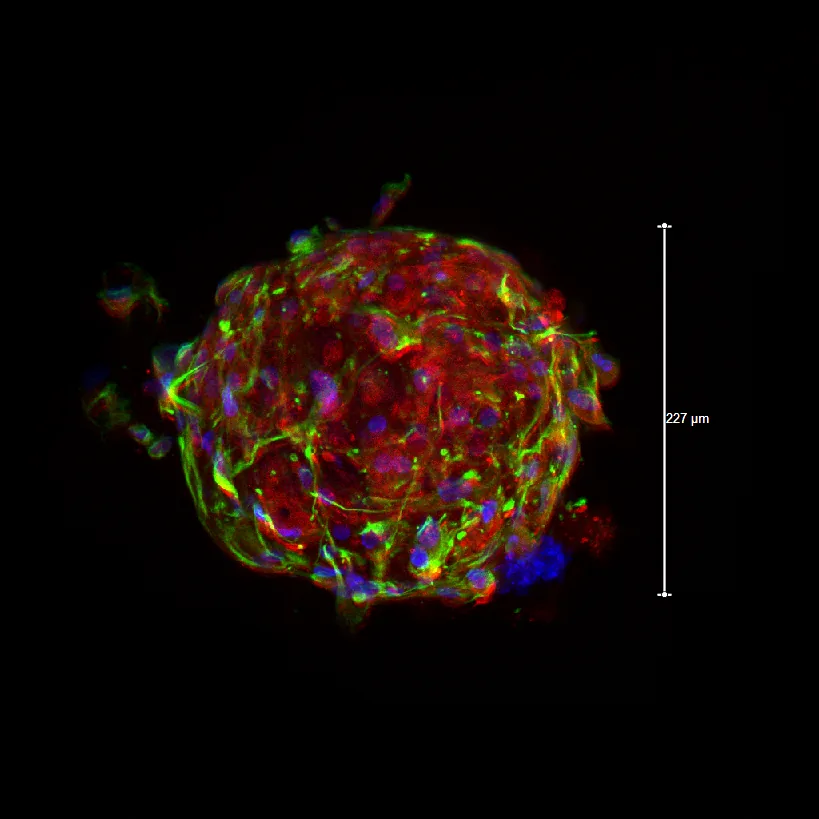
14-day liver organoid made from a mixture of primary liver cells. The red staining (albumin) shows albumin being produced from the hepatocytes and the green staining (vimentin) indicates the presence of hepatic stellate cells.
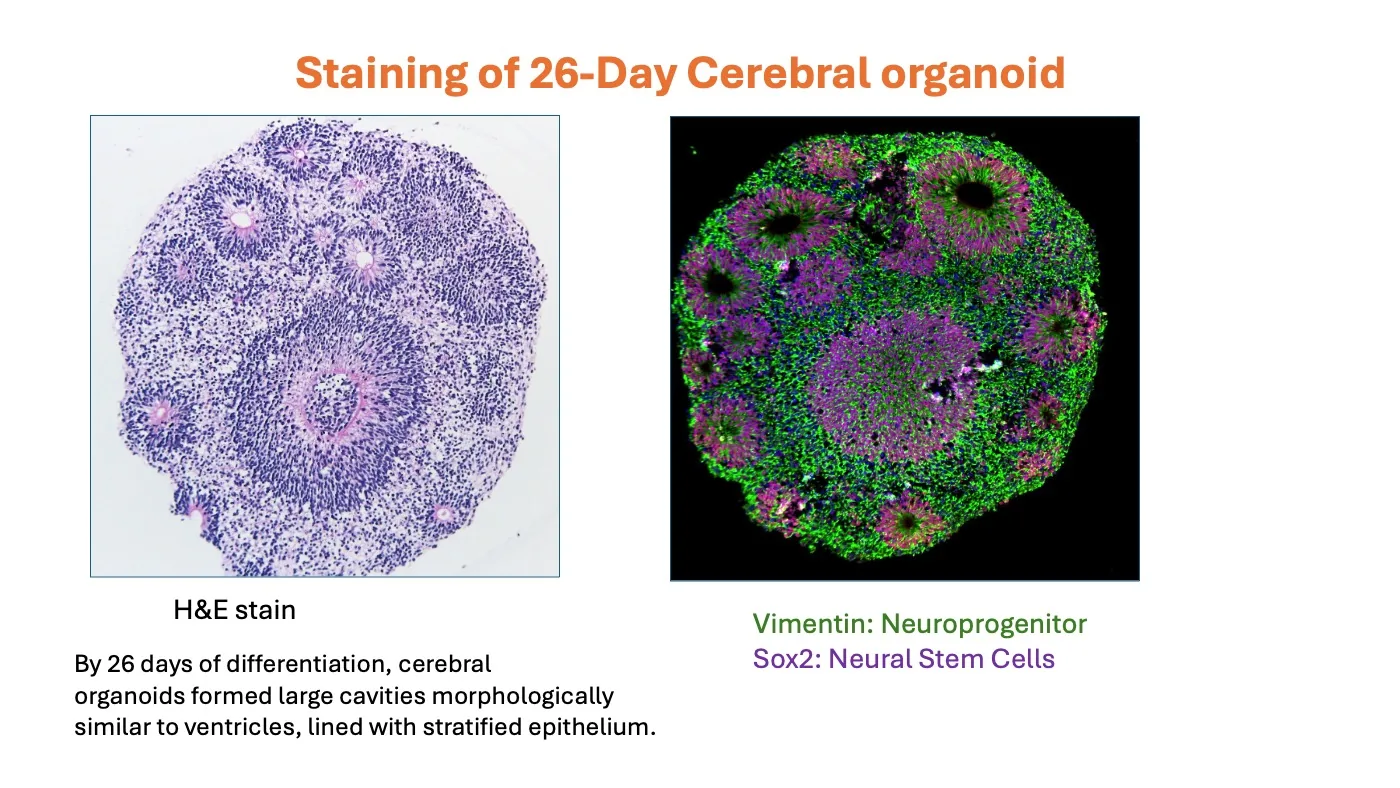
26-day cerebral brain organoid differentiated from human induced pluripotent stem cells. The left panel shows large cavities morphologically similar to ventricles, lined with stratified epithelium. The right panel shows vimentin-positive neuroprogenitor cells and Sox2-positive neural stem cells.
For further information, see these related records:
Learn more
Open the sections below for a deeper look at the mission, value, and participation paths within the PhysioVerse open ecosystem.
PhysioVerse is an open ecosystem for organoids, body-on-chip systems, tissue chips, organ tissue equivalents, and related microphysiological systems. It connects people, datasets, tools, workflows, standards exchange, training, and translational pathways so the field can move toward reproducible, interoperable, and widely adoptable approaches.
Society is at a critical juncture, relying on limited methods and animal testing to develop transformative technology. For a field that is attempting to evolve rapidly, this has created barriers and fragmentation has impeded innovation and access to new therapies. We are in search of bold pioneers to help create ground-breaking approaches that improve human and animal health.
Through the development and adoption of organoids and body-on-chip systems, also known as microphysiological systems, the field can:
An open-source ecosystem depends on more than a code repository. PhysioVerse provides an innovation platform for people and organizations to curate specialty datasets, validate, benchmark, search datasets, develop models, submit files, improve metadata practices, contribute to tool development, review submissions for enhancements, support and receive training, and help institutions adopt shared workflows.
This platform helps communities reduce fragmentation and improve reproducibility, discovery, manufacturing, shipping and storage, analytical capabilities, and translation for organoid, chip-based, and related advanced model systems. This work contributes to standards, interoperability, workforce development, economic development, and translation through partnerships with the NSF Regenerative Medicine Engine in North Carolina, WFIRM, and RegMIC.
PhysioVerse is designed for users, data contributors, tool developers, curators, researchers, industry partners, institutions, training teams, standards contributors, and translational stakeholders. Each group can participate in a practical way: discovering data, submitting resources, improving metadata, contributing tools, joining learning activities, reviewing submissions, or helping institutions adopt shared workflows.
Start with the On-Ramp if you are new to the ecosystem. Use the Data Library to discover resources, choose Contribute to submit data or metadata, explore Tools and GitHub for technical resources, or visit Community and News and Events to join activities and follow updates.
Where should I start?
PhysioVerse connects users to the right entry point, whether they want to find data, contribute resources, use tools, align metadata, join the community, or learn how to participate.
Start with the On-Ramp to choose the right path for your role.
Open On-RampI want to find dataUse the Data Library and Find Data pages to discover searchable records and resources.
Go to Data LibraryI want to submit dataPrepare dataset records, metadata, files, repository links, and supporting documentation.
Submit DataI want to describe metadataUse contributor metadata guidance to organize model, assay, file, and provenance information.
View MetadataI need tools or codeExplore open-source tools, workflows, examples, GitHub resources, and sandbox activities.
View GitHubI care about standardsUse Standards Exchange resources to align descriptors and practices across teams.
View StandardsI want to learnFind onboarding, training, and learning resources for users, contributors, curators, and institutions.
Learning NetworkI want to join the communityConnect through Community, News and Events, and Contact pages.
Join CommunityI am from industryExplore translational pathways and opportunities to connect advanced model systems with practical adoption.
Industry PathI need supportReach out about participation, data contribution, collaboration, training, or platform questions.
Contact TeamModel spotlight
The airway organ tissue equivalent (OTE)-on-a-chip model is one example of how advanced in vitro and microphysiological systems can mimic important features of the human airway. By recreating tissue organization and dynamic airway behavior, models like this can support disease studies, exposure studies, toxicity assessment, drug discovery, and more human-relevant research while helping reduce reliance on animal models.
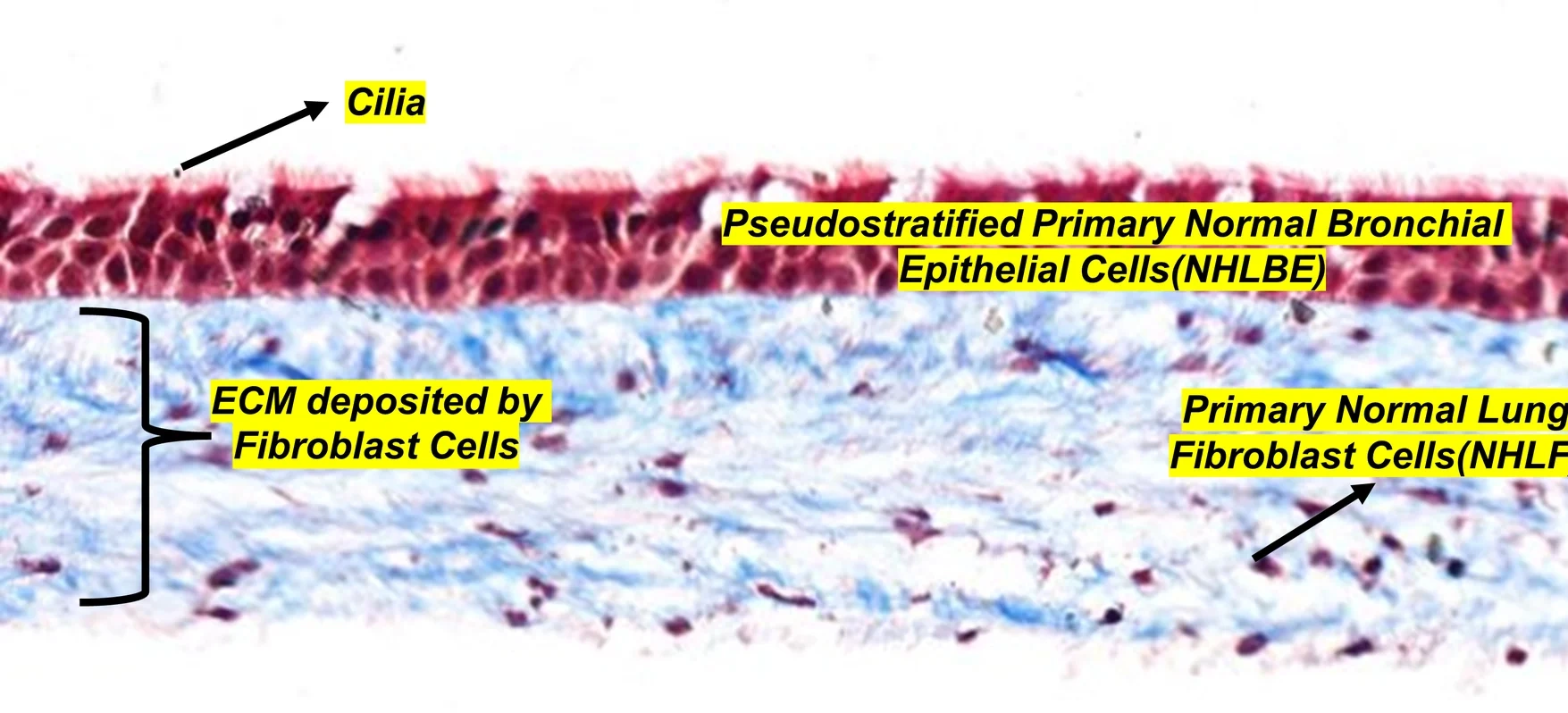
Models like this can improve drug discovery, strengthen safety testing, reduce reliance on animal models, and help accelerate better therapies. Their value grows when imaging, omics, and other data modalities can be interpreted, compared, and reused across studies instead of remaining isolated within individual laboratories.
That is why an open-source ecosystem like PhysioVerse is needed. PhysioVerse helps connect in vitro and microphysiological system data with shared metadata, model descriptors, protocols, assay outputs, file relationships, and review workflows. By making these data more standardized and discoverable, PhysioVerse can help the community compare models across laboratories, build confidence in results, support regulatory and translational use, and move the field toward more reproducible and human-relevant science.
News and Events
Follow platform updates, workshops, release notes, standards activities, training opportunities, and ways to participate in PhysioVerse.
Follow community workshops, platform updates, release notes, and opportunities to participate.
Track practical conversations around descriptors, metadata, benchmarking, and interoperability.
Find onboarding, training, and learning resources for contributors, users, curators, and institutions.
Participate in PhysioVerse
Join as a user, data contributor, tool developer, curator, training contributor, industry partner, institutional participant, or translational stakeholder.
Manufacturing partner
Connect with RegMIC and its work advancing regenerative manufacturing, scale-up, and commercialization across the PhysioVerse ecosystem.